
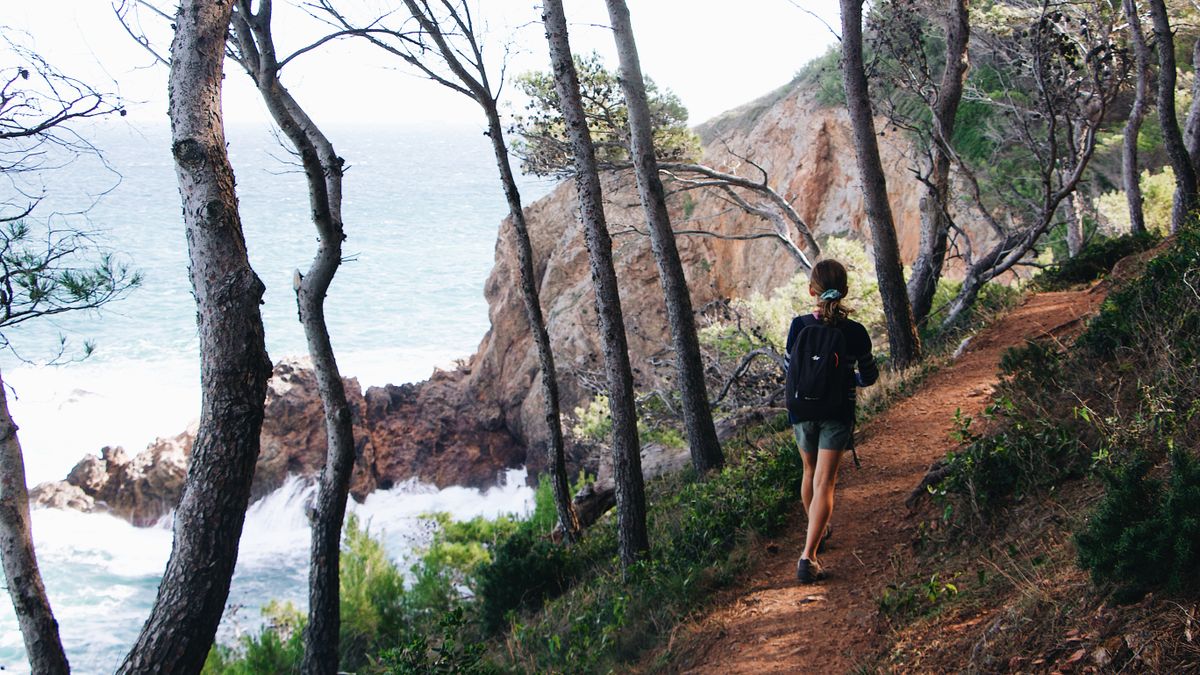
On almost any popular stretch of British coast, the same pattern plays out. The car park fills by half ten, the path from it to the sand carries a steady procession of windbreaks and cool bags, and within a hundred metres of the last litter bin the beach is a patchwork of towels. Walk another fifteen minutes along the shore, though, and the numbers drop away sharply. Most people are perfectly willing to drive three hours and then refuse to walk twenty minutes. That is your advantage.
This is not about hunting down secret beaches, of which there are very few left, and the ones that remain tend to be secret for good reason: crumbling cliffs, no safe access, fragile wildlife. The aim is to find beaches that are awkward enough to empty out without being dangerous or unwelcoming.
An Ordnance Survey Explorer map at 1:25,000 is the single most useful tool here. You are looking for three things at once: a car park, a public footpath leading away from it, and a stretch of coastline where the path runs near the shore but no road does. Where a road hugs the beach, expect company. Where the nearest road ends half a mile inland, expect a handful of people and a great many seabirds.
Study the contour lines as well. A path that climbs steeply onto a headland will halve the number of people who bother. So will a route that crosses a golf course, a caravan site or a field with livestock. None of these are obstacles in themselves; they are filters.
Guidebooks and online beach lists recycle the same dozen names. Local knowledge is more current and far more specific. A good rule is to ask two different people, because access can change with a new landowner, coastal erosion or seasonal nesting restrictions.
Places worth asking in are the village shop, the pub, the harbourmaster's office and the staff at a surf or outdoor shop. Ask concrete questions rather than "where's a quiet beach":
You will often get an answer that begins, "Well, most people go to X, but if you carry on past the second gate..." That sentence is worth more than any list you can download.
On many stretches of coast, the quietest beach is the same beach at a different hour. Sand that links two coves at low water vanishes by mid-tide, and it takes the crowds with it. Arrive two hours before low water, plan to leave an hour after, and always allow more margin than feels necessary. Gullies fill quickly, and the fastest route back is often not the one you came by.
Tide tables are free from harbour offices, yacht clubs and many village shops, and a printed copy is easier to trust than patchy phone signal three miles from a road. Beyond tides, early mornings and evenings after six are almost always quieter, even in August. If you can travel outside school holidays, late June and most of September offer warm sea temperatures and half the people. Check wind direction as well as temperature: a cove facing away from a stiff westerly can be delightful when the main beach is being sandblasted.
A few examples around the UK that show the pattern at work:
The beaches described above stay pleasant because the people who find them behave well. Park considerately and never block a farm gate, a passing place or a private drive, even briefly. Take everything home, including fruit peel and cigarette ends, and leave driftwood where you found it for the insects and birds that use it.
Keep dogs under close control around livestock and ground-nesting birds between March and July, and give seals and seabirds a wide berth rather than walking between them and the water. Carry a paper map, tell someone your route and expected return time, and accept that a "quiet" beach is still a place with a tide, a weather forecast and no lifeguards. Treat it with a little care and it will stay quiet for the next person who bothers to walk that extra fifteen minutes.

Hi, my name is Anthony kuber. I am artist and fashion designer.
I love to travel and writing blogging.
Your email address will not be published. Required fields are marked *
Software Developer & Writer
Hey, I'm Diva, a developer and writer blending code and creativity. I'm driven by a deep curiosity and a relentless pursuit of excellence. Join me as I craft digital solutions and captivating stories.


